Linguistic enhancement training
At our daycare center, we see language as the key to the world and an essential part of children's development and active participation in everyday life.
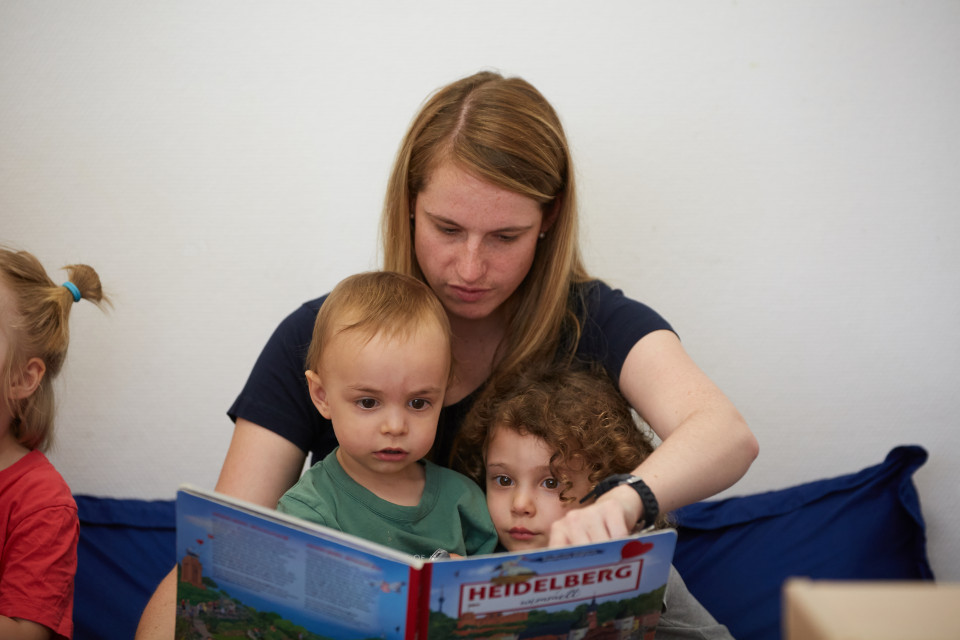
Language acquisition is a natural learning process that we specifically support through daily interactions. We see ourselves as language role models who help the children to expand and consolidate their use of language through conversations and activities.
Our language support is firmly integrated into everyday life. Even during simple activities such as setting the table or brushing teeth, we create opportunities for the children to actively experience and use language. We use rituals such as songs, rhymes and movement games to playfully promote the children's understanding of language and their ability to express themselves. These skills are of great importance for the children's personal development, as they help them to express their needs and feelings clearly.
As educational professionals, we also see ourselves as important initiators who sensitize children in different age groups to language. We use both spoken language and sign-supported communication (SAC) to promote the language development of each individual child. It is particularly important to us to also support children with language impairments through everyday and individual support measures.
Close cooperation with the families is of great importance to us. We attach particular importance to valuing the children's mother tongue and using it as a basis for their further language development. For example, we offer books in different languages and organize intercultural reading sessions to awaken and deepen the children's interest in language. We also encourage parents to actively use the family language at home, for example by reading aloud together.
Another focus of our work is early literacy. We encourage children's natural urge to explore by offering them opportunities to familiarize themselves with the world of writing through writing, drawing and handling books. Our cozy reading corners invite the children to listen to stories and gain their first experiences with writing. We introduce basic rules and symbols in a playful way, for example through the magnets with name tags with which the children sign in or the presence of letters and numbers as toys, in order to give the children a feeling for writing and motivate them to use writing in everyday life.
In our daycare center, we attach great importance to close cooperation with the families in order to ensure the best possible linguistic and written development of the children. Together we create a supportive environment in which each child is supported in their individual language development.
English lessons in the large red and green kindergarten groups
In the large kindergarten groups (red and green), English is taught every week in small groups. The textbook "English with Mopsy and me" (Leonora Fröhlich-Ward) is used for each lesson. This book contains 24 practice-oriented lessons with exercises, worksheets, picture cards, game plans and songs. The hand puppet "Mopsy" will introduce the children to the English language in a playful and action-oriented way. Through real-life topics from everyday life, movement games and rituals as well as the additional use of sign-supported communication, the foreign language is learned intuitively and emotionally with all the senses. Program topics include the body, weather, animals, numbers, food and much more.
Example of an English lesson:
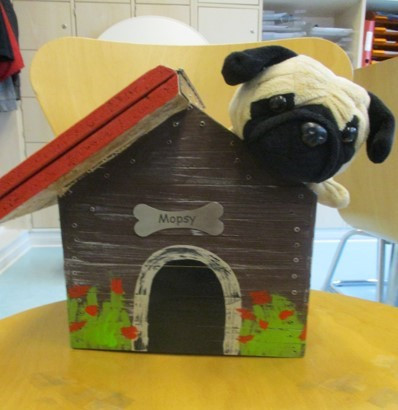
The children sit in a circle, Mopsy's doghouse is in the middle. As Mopsy is not visible at first, the children and the English teacher call out his name. After three attempts, the children hear a bark and one child is allowed to fetch Mopsy from the doghouse. Mopsy then greets the children with "Good morning, children!" and tries to remember the children's names: "Is your name... Lisa?". Unfortunately, Mopsy is a little forgetful and often gives the wrong names. The child then answers: "No! My name is Hannah!" After the greeting, everyone sings the welcome song "Good morning, good morning, good morning to you, good morning everybody and how do you do?". Mopsy then introduces one of the previously mentioned topics.
On the last day of kindergarten (when starting school or moving house), the children receive their own English folder with all the topics, songs and worksheets covered.
{CONCEPT_NAVI}