Free play
The toddler's play (1/2 - 2 years)
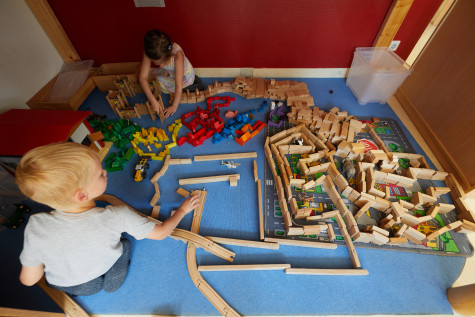
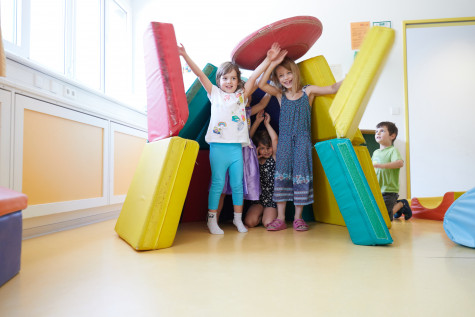
Our facility actively supports children's learning through play. Through play, children develop their personality and explore their environment. Their imagination unfolds, they dream, create magic and constantly develop new ideas.
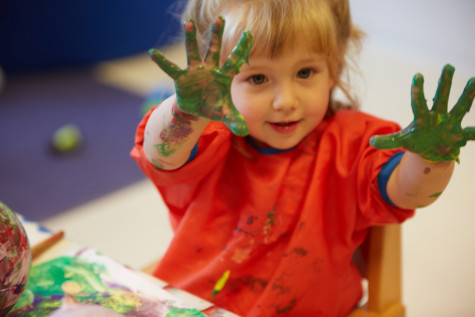
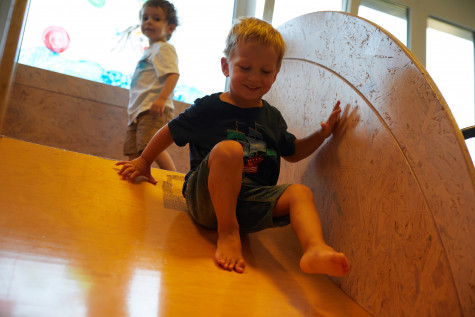
Children's creativity and spontaneity can be encouraged from an early age through a variety of play activities. Even with infants, educational professionals can stimulate the senses with loving speech and singing. A wide range of materials encourages children to discover the environment and stimulate their senses. Examples of such materials are wood, wool, boxes and cardboard boxes.
We provide a selection of old clothes for role play and puppetry and a variety of interesting materials for crafting and building.
In order to allow the children to play freely, it is essential to maintain a regular daily routine and avoid hectic or irregular activities. Toddlers need meaningful toys that stimulate their imagination. This includes a limited number of picture books and stories.
For the youngest children in particular, it is important that what is told or shown (not from a screen) is repeated at regular intervals. Our pedagogical staff show understanding and inner involvement in the children's play. This means that the child is not interrupted or kept busy, but is provided with quiet, space and suitable toys.
At the beginning, we offer gentle stimulation or help that the child can take up. In this way, they learn to engage with the toys and gain their own experience, which contributes to their independence.
The children gain new experiences in an unfamiliar environment. They have to share toys and defend themselves against them being taken away. In the group, the children learn to play alongside each other, quickly find partners, show sympathy or antipathy for playmates and react verbally to the characteristics of the other children. It is important that educational professionals emphasize and praise particularly positive events, while negative events are given less importance.
We provide a selection of old clothes for role play and puppetry and a variety of interesting materials for crafting and building.
In order to allow the children to play freely, it is essential to maintain a regular daily routine and avoid hectic or irregular activities. Toddlers need meaningful toys that stimulate their imagination. This includes a limited number of picture books and stories.
For the youngest children in particular, it is important that what is told or shown (not from a screen) is repeated at regular intervals. Our pedagogical staff show understanding and inner involvement in the children's play. This means that the child is not interrupted or kept busy, but is provided with quiet, space and suitable toys.
At the beginning, we offer gentle stimulation or help that the child can take up. In this way, they learn to engage with the toys and gain their own experience, which contributes to their independence.
The children gain new experiences in an unfamiliar environment. They have to share toys and defend themselves against them being taken away. In the group, the children learn to play alongside each other, quickly find partners, show sympathy or antipathy for playmates and react verbally to the characteristics of the other children. It is important that educational professionals emphasize and praise particularly positive events, while negative events are given less importance.
The importance of free play for children aged 2 and over
During free play, educational professionals enable children to pursue their personal interests within a certain time frame and
choose their own play partners. This happens, for example, during role play in the doll corner, building in the construction corner, board games or puzzles. Role play is of particular psychological importance, as children learn to portray another person and thus cope with everyday life.
Role play is therefore one of the most important play experiences for children.
Educational professionals take on an accompanying and advisory role and support the children in realizing their individual ideas.
During free play, the child experiences various behaviors and events that play an important role in growing up and social learning. This includes not only the experiences that the child has alone, but also the interactions with other children. In this way, the child can experience their play partners or themselves as helpful or selfish.
For example, if a child is doing handicrafts alone and is stuck, the adults have the opportunity to give advice and provide assistance; however, the other children often help each other too. This promotes a willingness to help and a sense of community within the group. Particularly reserved children are thus motivated to approach others.
During free play, a child also learns that sometimes they cannot count on the support of others and learns to deal with this. These negative experiences are just as important as the positive ones, as they contribute to the development of resilience.
Especially in a daycare center that offers many activities, it is important that a child learns to concentrate on a particular game and to complete it alone. When a child successfully completes a game alone or with others, this strengthens their self-confidence and perseverance. A completed puzzle, for example, is a tremendous sense of achievement.
choose their own play partners. This happens, for example, during role play in the doll corner, building in the construction corner, board games or puzzles. Role play is of particular psychological importance, as children learn to portray another person and thus cope with everyday life.
Role play is therefore one of the most important play experiences for children.
Educational professionals take on an accompanying and advisory role and support the children in realizing their individual ideas.
During free play, the child experiences various behaviors and events that play an important role in growing up and social learning. This includes not only the experiences that the child has alone, but also the interactions with other children. In this way, the child can experience their play partners or themselves as helpful or selfish.
For example, if a child is doing handicrafts alone and is stuck, the adults have the opportunity to give advice and provide assistance; however, the other children often help each other too. This promotes a willingness to help and a sense of community within the group. Particularly reserved children are thus motivated to approach others.
During free play, a child also learns that sometimes they cannot count on the support of others and learns to deal with this. These negative experiences are just as important as the positive ones, as they contribute to the development of resilience.
Especially in a daycare center that offers many activities, it is important that a child learns to concentrate on a particular game and to complete it alone. When a child successfully completes a game alone or with others, this strengthens their self-confidence and perseverance. A completed puzzle, for example, is a tremendous sense of achievement.
The importance of forms of play and activities
Playing and experiencing together within the group promotes a feeling of inner connection in children. It strengthens mutual trust and the feeling of security.
Finger games are used to establish initial connections to the outside world, for example by imitating a mouse, a worm, the wind or a tree. A flag waving on a tower is also playfully integrated to sensitize the children's perception of their environment. The simple rhymes and verses expand the vocabulary and train the children's hearing.
In addition, dexterity can be supported through small handicrafts. Educational specialists also perform puppet and table theater to promote visual imagination.
Finger games are used to establish initial connections to the outside world, for example by imitating a mouse, a worm, the wind or a tree. A flag waving on a tower is also playfully integrated to sensitize the children's perception of their environment. The simple rhymes and verses expand the vocabulary and train the children's hearing.
In addition, dexterity can be supported through small handicrafts. Educational specialists also perform puppet and table theater to promote visual imagination.
Singing, music and rhythmic language games motivate children to make movements such as dancing, spinning and clapping. Circle and movement games are very popular with children. These games can be supplemented with simple songs and verses, for example about cars, trains, creeping cats or stampeding elephants, and can be turned into movement activities. If the weather is unfavorable, this type of imaginative play can be continued indoors, for example in the group or gym room.
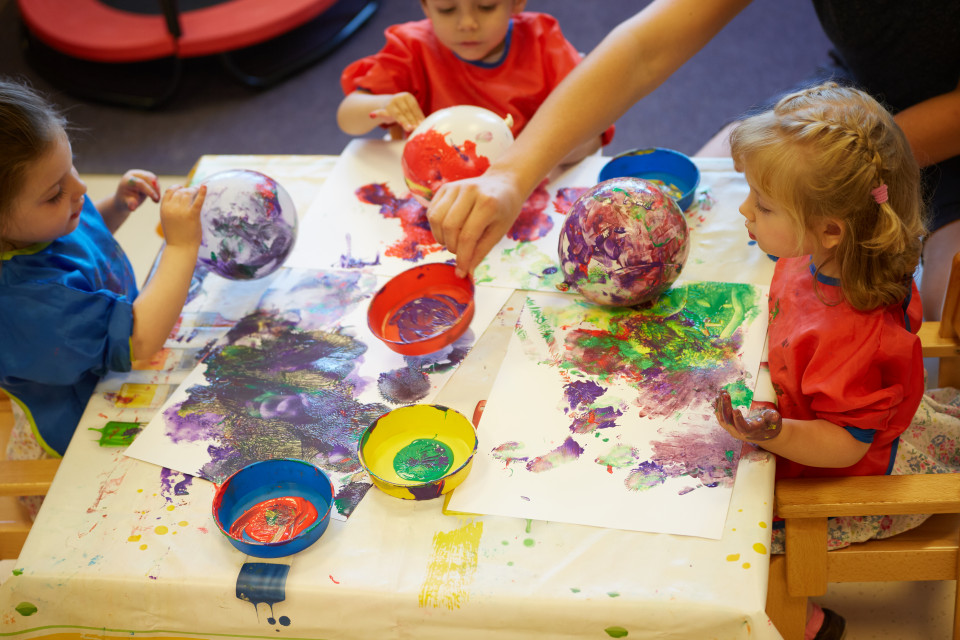
The educational activities also allow children to get to know and try out different materials. This includes experimenting with paper, crayons, plasticine, paints and scissors. The aim is to focus on the creative process rather than the end product. Looking at picture books together or telling stories offers the children a cozy break and encourages cuddle time.
The educational activities also allow children to get to know and try out different materials. This includes experimenting with paper, crayons, plasticine, paints and scissors. The aim is to focus on the creative process rather than the end product. Looking at picture books together or telling stories offers the children a cozy break and encourages cuddle time.
Experiences in the group
Living in a community gives children a sense of security and safety. Older children learn to show consideration for younger children, younger children in turn learn the group rules from the older ones. Social behavior means observing certain rules in dealing with each other. These rules include consideration for the needs of other children.
In this way, the children learn to recognize the feelings of others.
- to understand
- to accept
- and to respect them
At the same time, the child learns to communicate their own needs and interests to others or to defend them. The children are encouraged to seek help from people they trust in situations where they feel their boundaries have been violated. Kindergarten children from the age of 4 can take part in the Kindergartenplus project. A project to strengthen emotional and social skills.
This strengthens self-esteem. The educational staff repeatedly show each individual child that they are accepted. They try to positively reinforce their social behavior.
Conflicts and different individual sensitivities are part of everyday group life. The children must learn to deal with and overcome conflicts.
This strengthens self-esteem. The educational staff repeatedly show each individual child that they are accepted. They try to positively reinforce their social behavior.
Conflicts and different individual sensitivities are part of everyday group life. The children must learn to deal with and overcome conflicts.
The children are made aware of this:
- it is not who is stronger or older who has the right on their side
- negotiation should be based on words, not violence
- you can look for solutions together
- compromises should be made
- the opposition should be turned into cooperation
Teaching independence is particularly important in the group. The child learns that it can already do certain things on its own. This teaches them to take responsibility, which in turn strengthens their self-esteem.