
Early musical promotion
Early musical education
Early music education not only promotes musical skills, but also the holistic development of children and enriches their everyday lives in a variety of ways. Regular and playful exposure to music not only supports children's musical development, but also their cognitive, social and emotional development.
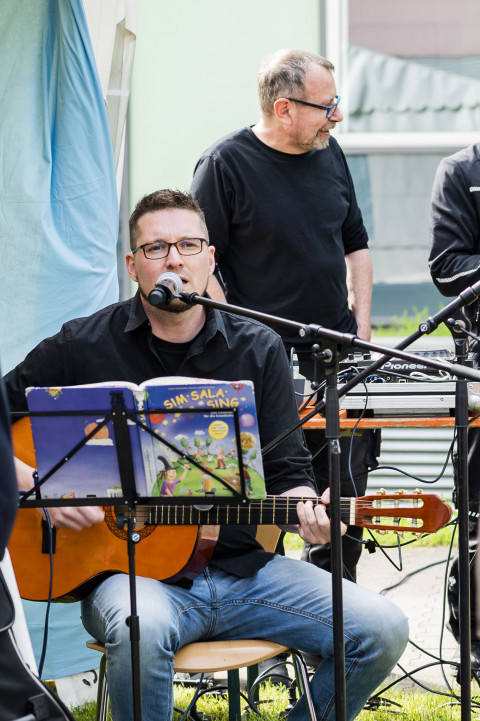
Singing is a central element of early musical education. Songs and rhymes, such as tidying-up songs, promote the children's understanding of language, pronunciation and vocabulary. Regular singing circles for festivals or seasons, for example, create a communal atmosphere and strengthen the feeling of togetherness within the group. The rhythmic accompaniment of songs by the specialist staff with guitar or keyboard as well as with simple instruments such as drums, rattles or tonewoods, which the children can play themselves, also supports the children's sense of rhythm and motor skills. The children are allowed to try out instruments during sound stories as well as with our music teacher, who alternates between the crèche and kindergarten on a weekly basis, encouraging the children's natural enjoyment of music and helping them to develop their musical skills in an age-appropriate way.
Another important aspect is listening to music. Consciously listening to and recognizing melodies, rhythms and instruments trains auditory perception and the ability to concentrate. In kindergarten, we also listen to different pieces of music from different cultures to reflect the children's cultural background. Occasionally we also listen to pieces of music from other eras to broaden the children's musical horizons.
Dances and movement games are also integral parts of early music education. By dancing to music, children learn to move their bodies to the rhythm of the music, which improves their coordination and balance skills. Movement sequences to music also promote the children's body awareness and ability to express themselves.
Dances and movement games are also integral parts of early music education. By dancing to music, children learn to move their bodies to the rhythm of the music, which improves their coordination and balance skills. Movement sequences to music also promote the children's body awareness and ability to express themselves.
{CONCEPT_NAVI}